
New-patient acceptance
New-patient appointment codes can indicate whether a provider may be accepting new patients by plan or line of business.

Provider data changes constantly. Locations move. Demographics shift. Networks expand. Providers update affiliations, services, hours, and contact information. For health plans, keeping that information accurate across provider directories, claims, authorizations, utilization management, network operations, and member access workflows can quickly become a costly operational challenge.
When provider data is incomplete, outdated, or spread across disconnected systems, the impact does not stay confined to the directory. It can create downstream denials, duplicate outreach, manual rework, delayed onboarding, provider abrasion, and lower confidence in the information members rely on to find care.
Availity Provider Data Management helps health plans maintain accurate, current, and complete provider data across payer workflows. It combines provider-submitted information, payer data, primary-source signals, and live transaction patterns to surface likely updates directly to providers during attestation—before corrected data flows back to payer systems.
Connect with Availity to explore ways to improve provider data accuracy with attested, transaction-informed provider records.
Explore ways to improve provider data accuracy with attested, transaction-informed provider records.

70% of U.S. providers actively attest
through Availity PDM, and directories
built on Availity data show a
75% accuracy rating.
Health plans depend on provider data for more than compliance. Accurate provider information supports directory accuracy, network visibility, claims adjudication, prior authorization, utilization management, provider onboarding, member access, and operational reporting. When payer teams manage provider data across separate systems, vendors, forms, portals, and spreadsheets, it becomes harder to maintain a trusted provider record.
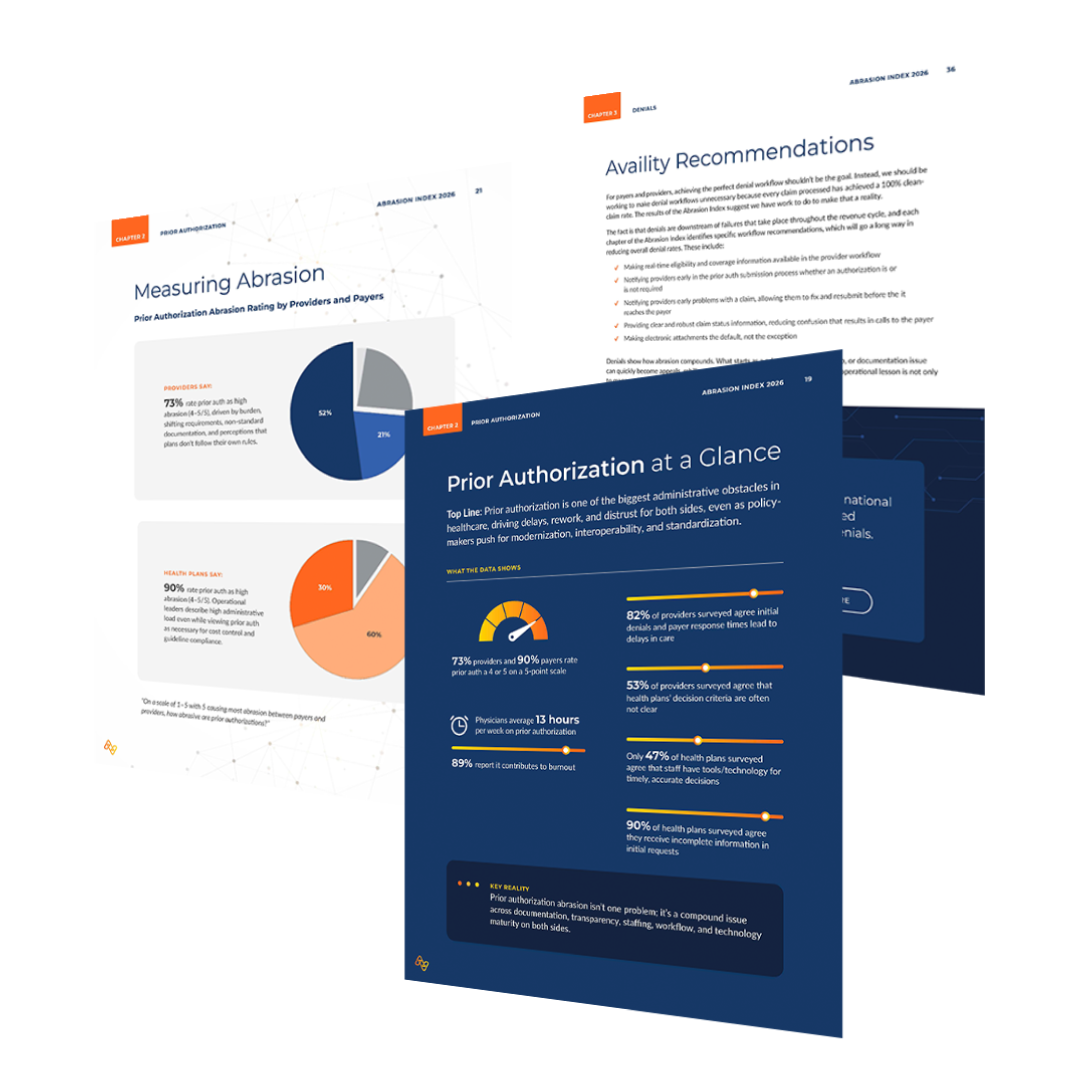
The Availity Abrasion Index found that administrative friction often compounds when data, timing, and workflow accountability break down between payers and providers. Timing failures can be as damaging as accuracy failures when updated information arrives too late to prevent downstream denials, appeals, rework, or distrust.
That is why provider data management matters: it gives health plans a more reliable way to keep provider information accurate, current, and usable before errors spread into claims, authorizations, directories, and member-facing workflows.

Availity Provider Data Management helps payers collect provider demographic and service data, support directory attestation, monitor transaction-based signals, and create an attested provider golden record—a single, normalized provider record that can support directories, enrollment, network management, credentialing intake, claims, authorizations, utilization management, and other payer workflows.
Providers can review, update, and attest to information through familiar Availity workflows, helping reduce duplicate outreach and one-off payer requests.
Large organizations can support provider roster submission and roster upload attestation workflows where appropriate, helping payers manage updates at scale.
Availity supports more than 400 provider data elements, helping payers capture information needed beyond minimum directory requirements.
Claims, authorizations, eligibility, referrals, and other transaction patterns can help identify provider data that may be incomplete, stale, or inconsistent with real-world activity, then flag those items for provider review during attestation.
Transaction signals can help prioritize which records need provider review so attestation focuses on likely data gaps instead of asking every provider to reconfirm every field.
Provider data can be prepopulated, reviewed, attested, enriched, normalized, scored, and transmitted to payer systems for use across directories, claims, authorizations, utilization management, and other workflows.
Availity Provider Data Management is not a replacement for a payer’s master data management system. It is a payer-focused workflow for collecting, attesting, and distributing provider data that helps health plans improve the quality of the data feeding those systems.
Provider directories often depend on scheduled updates, broad outreach, and manual review. But health plans already see a continuous stream of activity that can reveal how providers are actually practicing. Availity uses those live transaction patterns to help identify likely data changes and present them to providers during attestation, so providers can confirm, correct, or reject suggested updates before they are delivered back to the payer.
Transaction patterns do not replace provider attestation or regulatory directory verification. They make attestation more focused and meaningful by showing providers the specific data elements that appear out of sync with recent activity, then using provider confirmation to improve the golden record before downstream payer systems rely on it.
New-patient acceptance
New-patient appointment codes can indicate whether a provider may be accepting new patients by plan or line of business.

Location changes
New addresses appearing on claims or authorizations can flag candidate clinical locations, while listed addresses with little activity may need review.

Network participation and panel status
Billing activity that conflicts with network status, or a sudden drop in volume for a provider listed as accepting new patients, can prompt provider confirmation.

Specialty and service alignment
Procedures billed, authorization types requested, and place-of-service codes can help validate whether listed specialties and services reflect actual care patterns.

Telehealth availability
Telehealth place-of-service codes or modifiers can indicate where virtual care capabilities may need to be reflected in directory data.

Credentialing and compliance signals
Claims activity combined with license, DEA, or other expiration data can help prompt proactive review before records fall out of sync.

Provider data quality affects the payer enterprise. A stale address, mismatched affiliation, missing location, outdated specialty, inaccurate panel status, or missing telehealth capability can create problems that show up later as manual corrections, provider calls, directory complaints, stalled authorizations, claims exceptions, or member confusion.
Availity helps health plans address these issues earlier by improving the source data that downstream workflows depend on and using live transaction patterns to prompt provider review before suspected gaps become payer-side cleanup work. Better provider data can help payers:

Health plans face recurring directory attestation, provider data attestation, and roster submission requirements. Provider directories must be periodically reviewed and updated so members can find accurate information and payers can support directory accuracy obligations.
Availity supports payer attestation requirements by helping providers review and attest to provider demographics, locations, services, affiliations, and other directory data elements. For larger organizations, roster submission and roster upload workflows can help streamline updates across groups of providers while keeping directory attestation anchored to provider review.

The value of live transaction monitoring comes from closing the loop with providers before data flows back into payer systems. Availity Provider Data Management helps health plans move from broad data maintenance to a more targeted, provider-confirmed workflow.
Consolidate provider, payer, and primary-source data into one normalized record that supports directories, enrollment, credentialing intake, claims, and utilization management.
Overlay claims, authorizations, eligibility, referrals, and other activity to identify data elements that may not match current provider behavior.
Surface likely updates directly to providers as part of the attestation experience, so they can confirm, correct, or reject suggested changes instead of simply asking every provider to reconfirm every field.
Use attested golden records to support consumer-facing directories, network adequacy reporting, credentialing intake, enrollment, claims editing rules, and authorization workflows.
Apply confidence scoring that accounts for limited transaction history, conflicting signals, or provider responses to suggested updates. Use those scores to prioritize deeper review and improve the system over time.

Provider data management is one part of a larger provider lifecycle. The same provider record that supports directory accuracy can also influence credentialing intake, network participation, claims, authorizations, utilization management, payment workflows, member access, quality analytics, and cost-of-care insights.
When provider data management is disconnected from those workflows, payers may spend more time reconciling conflicting records, chasing missing information, and asking providers to repeat the same updates. A connected provider lifecycle approach helps health plans reuse trusted provider data, apply transaction-informed prompts during attestation, reduce friction earlier, and improve the operational foundation for payer-provider collaboration.

ealth plans do not need another disconnected provider data source. They need a scalable way to engage providers, collect accurate data, support directory attestation, and deliver usable records into the systems and teams that depend on them. Availity PDM brings measurable proof to that challenge through active provider attestation, directory accuracy, and transaction-informed provider review.
Availity Provider Data Management supports the data health plans need for directories, claims, authorizations, utilization management, network operations, and provider lifecycle workflows.
Providers can attest through familiar Availity experiences, helping reduce abrasion and improve participation.
70% of U.S. providers actively attest through Availity PDM, and directories built on Availity data show a 75% accuracy rating.
Availity can use payer-provider transaction patterns to surface likely data gaps to providers during attestation, helping make review more targeted before updated records flow back to payer systems.
Availity combines payer data, provider review, primary-source signals, transaction activity, and Availity network intelligence to support a more complete, attested provider record.
Better provider data can reduce manual maintenance, duplicate outreach, and downstream rework across payer teams.

With active attestation from 70% of U.S. providers, directories built on Availity data showing a 75% accuracy rating, and transaction-informed prompts that help providers review likely updates before data reaches payer workflows, Availity helps health plans build a more trusted foundation for provider data management.
Provider data management is the process of collecting, validating, updating, attesting, enriching, and maintaining provider information for health plan operations. For payers, this data supports provider directories, claims, authorizations, utilization management, network management, credentialing intake, compliance, member access, and provider lifecycle workflows.
Provider directory attestation is the process of having providers review and confirm that their directory information is accurate, current, and complete. This includes data such as demographics, locations, contact information, specialties, services, and affiliations.
Many payer directory accuracy programs require provider directory information to be verified at least every 90 days, consistent with quarterly directory verification expectations under federal directory accuracy requirements. Health plans may also have additional update timelines, such as making directory changes promptly after receiving new provider information. Availity helps support these recurring directory attestation workflows by giving providers a streamlined way to review, update, and attest to their information.
Roster submission attestation allows provider organizations to submit or update provider information in bulk, often through a roster upload process. For payers, roster submission helps maintain provider data across larger groups while keeping directory updates anchored to provider review and attestation.
Provider data management helps reduce denials and rework by improving data quality before errors reach downstream workflows. Live transaction patterns can flag records for provider review during attestation, helping prevent avoidable manual corrections, duplicate outreach, claims exceptions, and operational cleanup.
Transaction data can improve provider directory accuracy by identifying records that may not match real-world activity. Claims, authorizations, eligibility, referrals, place-of-service codes, and other signals can suggest updates to locations, specialties, services, telehealth availability, network participation, or panel status. Availity can surface those likely updates to providers during attestation before updated records flow back to payer systems.
Provider data management and credentialing both depend on accurate provider information, but they are different workflows. Provider data management supports directory attestation and shared provider data maintenance. Credentialing includes additional verification and review steps. Connected provider data can help prepopulate shared credentialing intake fields and reduce duplicate data entry.
Payer provider data management should connect to the broader provider lifecycle because the same provider record affects directories, credentialing intake, claims, authorizations, utilization management, network operations, member access, and analytics. Reusing trusted, transaction-informed data helps reduce friction before it compounds downstream.