Reducing Paper Claims to Unlock Faster Reimbursement
Cut costs + accelerate payments by eliminating paper

Cut costs + accelerate payments by eliminating paper
Increased volume of manual, paper based secondary claims that cause operational strain
Availity Revenue Cycle Management
80% decrease in paper claim volume
75% reduction in staff time spent on manual processes
Significantly faster reimbursements, improving cash flow and reducing administrative backlogs

Company: Regional Academic Health System
Employee Count: 5000+ employees
Product/Solution: Availity Revenue Cycle Management
A prominent academic health system—recognized nationally for its leadership in research, education, and patient care—noticed an increasing volume of manual, paper based secondary claims. As claims grew, the burden on administrative teams intensified, revealing clear opportunities to modernize processes and reduce operational strain.

Across the industry, uneven payer adoption of electronic secondary claims continues to create friction for revenue cycle teams, forcing organizations to juggle digital and manual processes. For this academic health system, that fragmentation translated into:
Labor-Intensive Workflows: Staff were spending excessive time printing, preparing, and mailing paper claims, shifting focus away from higher value initiatives.
Payer Limitations: A concentrated group of payers still required paper submissions, creating unavoidable manual work.
Rising Operational Costs: Printing, postage, and rework represented a meaningful financial drain.
Staffing Constraints: The administrative lift required to manage manual claims pulled team members away from strategic, patient-centered responsibilities.

To address these pressures, the organization partnered with Availity to design and implement a targeted automation strategy.
The teams began by analyzing the health system’s secondary claim volume, identifying high-volume payers, and mapping existing workflows in detail. This assessment formed the blueprint for a comprehensive automation approach tailored to the organization’s payer landscape.
Paper Reduction through Drop-to-Payer Automation: Availity deployed a drop-to-paper solution that dramatically streamlined operations by digitizing the claim creation process and reducing the dependency on manual printing.
Continuous Performance Monitoring: The teams established biannual reviews to adjust for shifts in payer volume and implemented enhanced reporting to track automation results during testing and beyond.
Financial Focus and Faster Reimbursement: Automation accelerated the reimbursement cycle, reducing delays typically associated with manual workflows and improving financial performance across key revenue cycle metrics.

decrease in paper claim volume
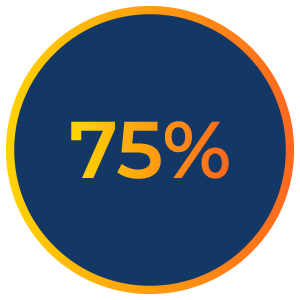
reduction in staff time spent on manual processes

Significantly faster reimbursements, improving cash flow and reducing administrative backlogs
By reengineering its secondary claims process with Availity’s drop-to-paper automation, the health system dramatically reduced manual work, accelerated reimbursements, and built a scalable, repeatable workflow for long-term success. The collaborative approach—grounded in data, payer segmentation, and transparent performance tracking—ensured a smooth implementation and lasting impact. This initiative demonstrates the power of automation to reduce costs, eliminate administrative friction, and free teams to focus on strategic, highvalue work. With Availity’s deep expertise and integrated RCM solutions, the organization now has a strong foundation for continued optimization across the revenue cycle.